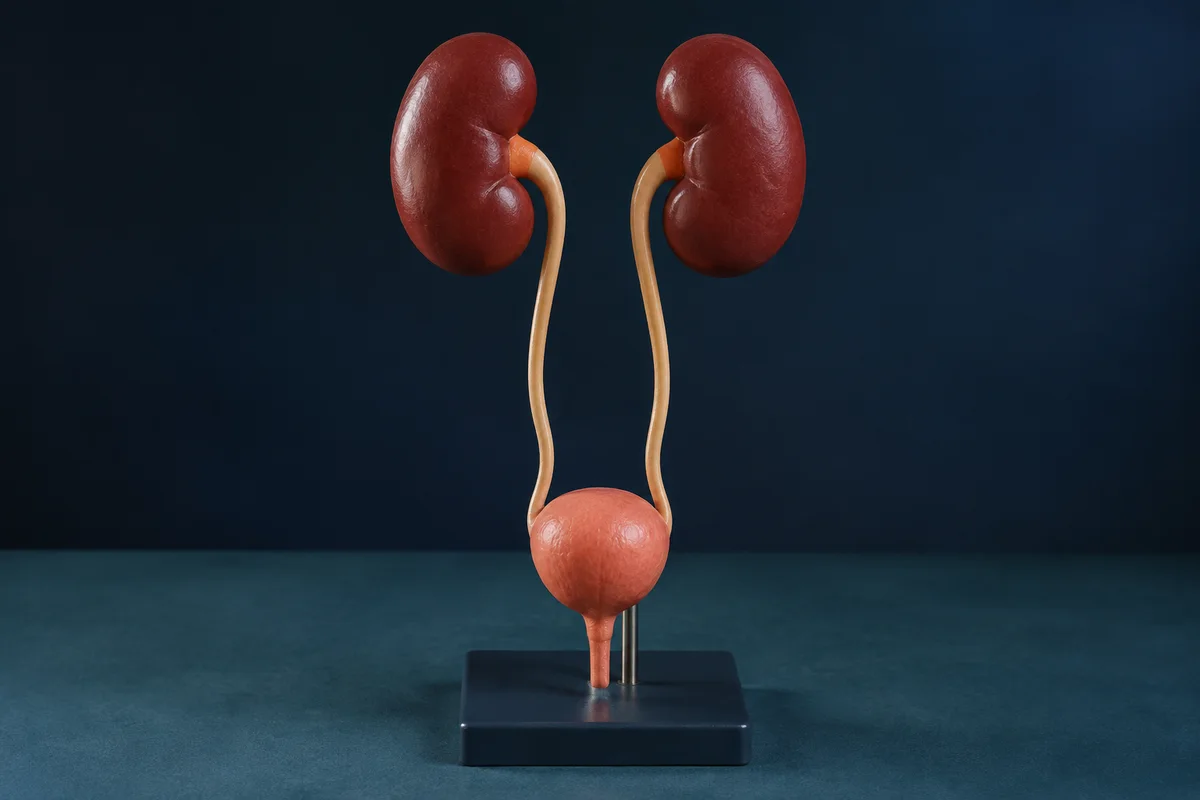
Symptoms that may need assessment
- Sudden severe pain in the side or back, often coming in waves
- Pain travelling down towards the groin or genitals
- Blood in the urine, or urine that looks smoky or pink
- Nausea and vomiting with the pain
- Burning while passing urine, or passing urine very often
- Passing gravel or small stone fragments
How it is assessed
Assessment usually involves an ultrasound of the kidneys, ureters and bladder, a urine test, kidney function blood tests, and in most surgical cases a low-dose CT scan (NCCT KUB), which shows the exact size, position and density of the stone. Those three things — size, site and how much the kidney is obstructed — decide what is done next.
How it is treated
Small stones may pass without a procedure. Depending on the stone and your health, treatment may include pain relief, advice on fluids and medication to help passage in selected cases. RIRS, ureteroscopy or PCNL may be considered when removal is needed. An infected, blocked kidney needs emergency treatment, which may include a stent or nephrostomy to drain the kidney and antibiotics. Definitive stone removal is usually delayed until the infection has cleared.
Related treatments