
Check that training is right for you
- Ask your clinician or pelvic health physiotherapist to check your technique and choose a programme. Pain, difficulty emptying or overly tight muscles may need a different approach, including relaxation.
- After prostate, bladder or pelvic surgery, ask exactly when to start or restart. If a urinary catheter is present, get specific advice before exercising rather than following a general video.
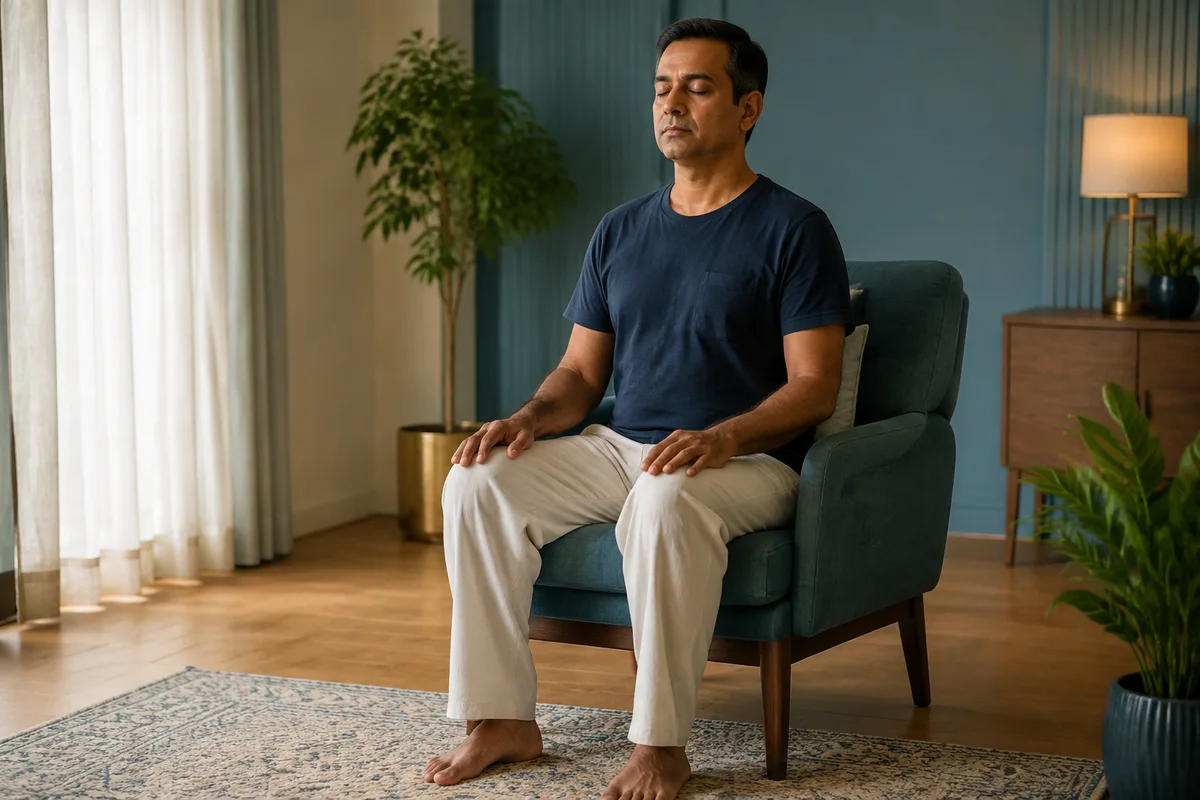
Practise a gentle lift, then release
- Sit or lie comfortably. Imagine stopping wind and gently closing around the urine passage, with an inward, upward lift. Do not push down or clench your buttocks, thighs or abdomen.
- Breathe normally. Hold only as comfortably advised, then let the muscles relax fully before another squeeze. Your programme may include both short and longer contractions; quality and relaxation matter more than forcing repetitions.
Build a comfortable routine
- Practise away from the toilet. Do not routinely stop and start your urine stream as an exercise: this can interfere with bladder emptying.
- Follow the programme regularly and expect gradual progress over weeks or months. Stop if exercise causes pain or worsens symptoms, and ask for reassessment; doing more is not always helpful.
Pelvic-floor exercise basics
Silent video with on-screen guidance. Your clinician’s instructions take priority.
Read the video transcript
Arunaditya Institute of Urosciences Advanced Urology & Andrology Hospital
Pelvic-floor exercise basics. A gentle introduction. Ask your clinician whether these exercises are suitable for you.
Start only when advised. After an operation, follow your surgeon’s timing and instructions. Ask if you have pain or difficulty relaxing.
Gently lift and squeeze. Imagine gently preventing wind from passing. Feel an inward lift around the back passage.
Keep breathing normally. Keep your buttocks and thighs relaxed. Avoid straining or holding your breath.
Relax fully between attempts. Let go completely. Ask a pelvic-floor physiotherapist to guide your technique and personal routine.
Do not practise while urinating. Repeatedly stopping the urine stream is not an exercise routine. Practise at another time.
Stop if it hurts. Stop and contact your clinician if pain develops or symptoms worsen. Follow an individual exercise plan.
More from trusted medical organisations
Independent resources on YouTube, in English. These are not hospital-produced videos.