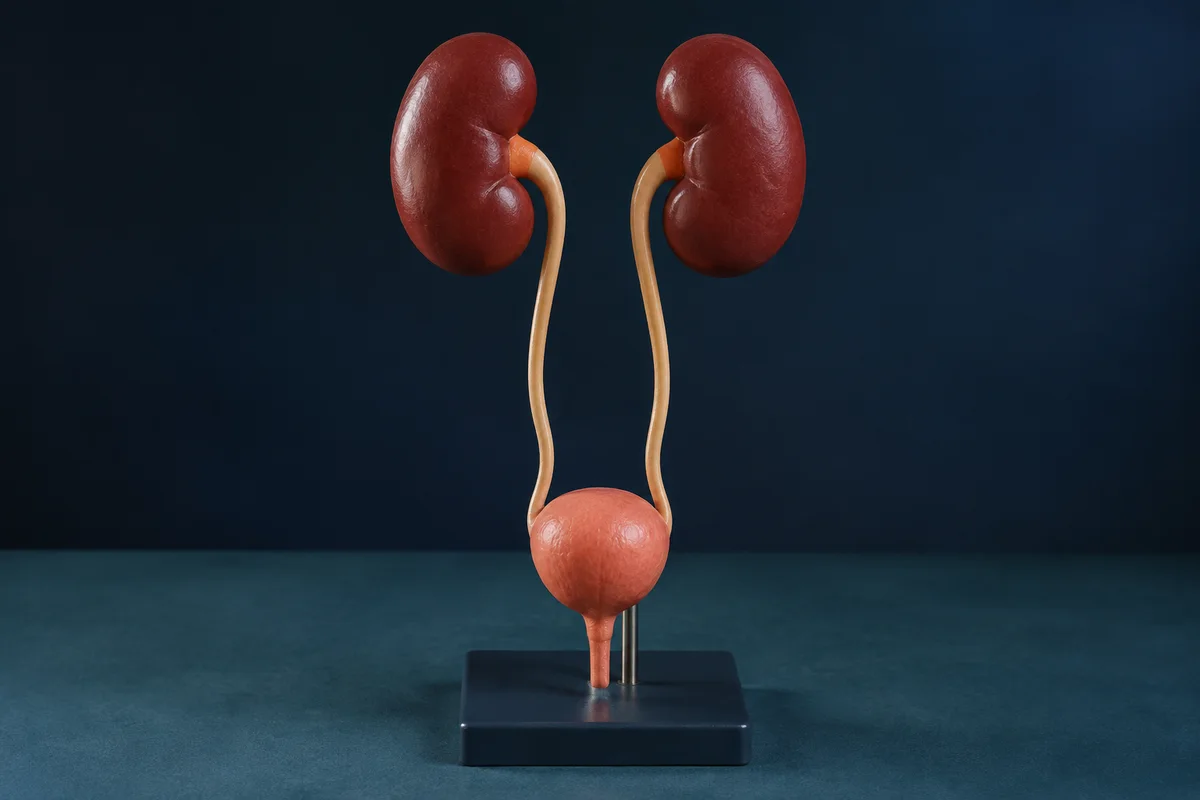
A ureteric stent is a temporary internal tube that helps urine drain from the kidney to the bladder. Your operation details and individual discharge instructions guide your recovery.
Illustrative image — not a hospital or patient photograph.
Know what may happen
Mild burning, urgency, more frequent urination or a little blood can occur after ureteroscopy. A stent may cause bladder or side discomfort, especially when urinating. Tell your team about persistent or worsening symptoms.
Take only the pain relief and other medicines agreed with your treating team. If antibiotics are prescribed, take the full prescribed course unless your clinician changes the plan.
Protect recovery and the stent
Drink according to your discharge plan and any kidney or heart-related fluid limit. Follow the team's advice about walking, work, exercise, sex and driving, including restrictions after anaesthesia.
If a string is visible, avoid tugging it. Do not remove the stent yourself unless your team has specifically instructed and taught you to do so. Contact them if it moves or comes out.
Keep the removal and review plan
Before leaving, confirm whether a stent was placed, how it will be removed or exchanged, and the date. If no appointment arrives, contact the urology team; do not assume the stent can stay indefinitely.
Attend follow-up for remaining stones, stone analysis and prevention advice. Feeling better does not confirm that all stones have cleared or that the stent has been removed.